









Taxpayers across Nassau and Suffolk counties fund a network of state-licensed group homes for people with developmental disabilities. What goes into those residents’ dinner plates doesn’t get a lot of scrutiny. It probably should.
Life’s WORC, the Garden City nonprofit that supports people with developmental disabilities and autism across Long Island, Queens, and Manhattan, has been wrestling with that question since at least 2026. The organization’s answer came from an unlikely hire: Susan Rust, a Huntington resident who spent years running a bakery in Bayville before taking on the culinary director role at Life’s WORC.
That’s not a typical career path. It’s also not a typical problem she’s trying to solve.
Developmental disability advocacy organizations have documented for years how people with autism and developmental disabilities face serious sensory and behavioral barriers around food. The practical result, in group home after group home, is depressingly familiar. Processed meals. Frozen dinners. Anything sodium-heavy and shelf-stable that doesn’t require staff to negotiate a mealtime standoff with a resistant resident.
Rust didn’t pretend she could fix that with a better recipe card. She started by sitting down with the people Life’s WORC actually supports, asking them directly what they liked, what they refused to eat, and why. That interview-and-focus-group step shaped everything that came after.
“When it comes to eating right and balanced meals, these individuals have most always been extremely challenged,” Rust told Long Island Press. “I heard a lot of frustration from both family members and staff about the difficulties in getting people supported to eat nutritional proteins. Unfortunately, it has been too easy to just provide junk food or sodium, sugar-filled processed instant foods as a quick fix.”
Worth noting: that quick fix isn’t free. Sodium-laden processed food carries long-term health costs that eventually hit Medicaid-funded care budgets. Rust’s model isn’t just philosophically better. It’s arguably cheaper downstream.
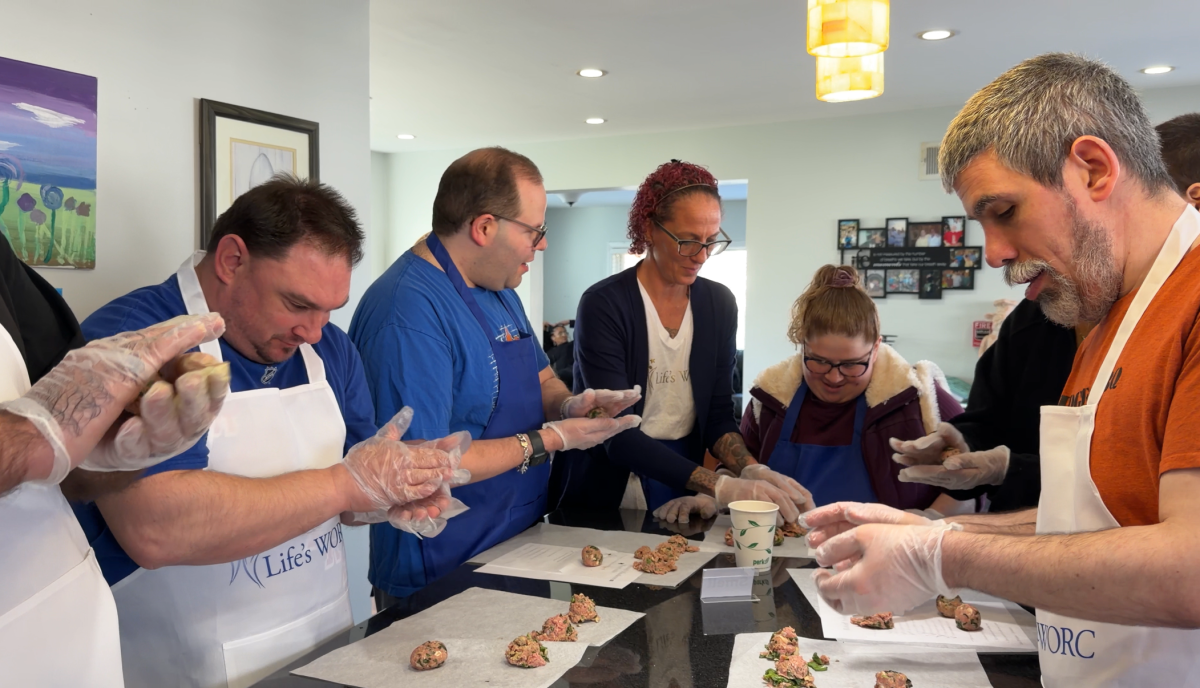
Her approach runs through a set of recipes taught to group home managers during cooking lessons and life skills sessions. Staff, managers, and residents plan meals together. Then they cook. Then they eat what they made.
Turkey meatballs became the signature example. Fresh ground turkey, not a frozen package. Participants chop mushrooms, add spinach, roll the meatballs themselves before they go in the oven. The physical involvement is deliberate. Touch, smell, the anticipation of watching something you made actually cook through, all of it matters to people who can’t always be reached through conversation alone.
“While the meatballs were in the oven, we talked about how this was a meal which they cooked,” she said. “The anticipation grew. While eating dinner, we credited everyone for their work in the kitchen.”
Ownership, it turns out, is a pretty effective seasoning.
The chicken finger lesson follows the same logic. Fresh, not frozen, not processed. Participants handle seasonings and herbs before anything hits the pan. The point isn’t just nutrition, it’s engagement before the food arrives at the table, using sensory entry points for residents who’d otherwise refuse to look at something unfamiliar on their plate.
Rust came to all of this through a route that didn’t go anywhere near a social services bureaucracy. Her Bayville bakery background gave her a completely different frame than someone trained in institutional food service. She doesn’t think about feeding a population. She thinks about what specific people actually want to eat and how to get them invested in making it.
The model she’s built at Life’s WORC is now integrated into the organization’s broader life skills curriculum, not treated as a separate nutrition program. Group home managers aren’t being handed a standardized menu and told to follow it. They’re being brought into the planning process, learning to run cooking sessions themselves.
That’s the piece worth watching. If staff turnover, which runs high in group home settings across Long Island, disrupts the institutional knowledge Rust has been building, the program’s long-term impact gets much harder to measure. And for taxpayers funding these services, it’s a fair question to keep asking: when the culinary director who built the system eventually moves on, who keeps the meatballs rolling?