








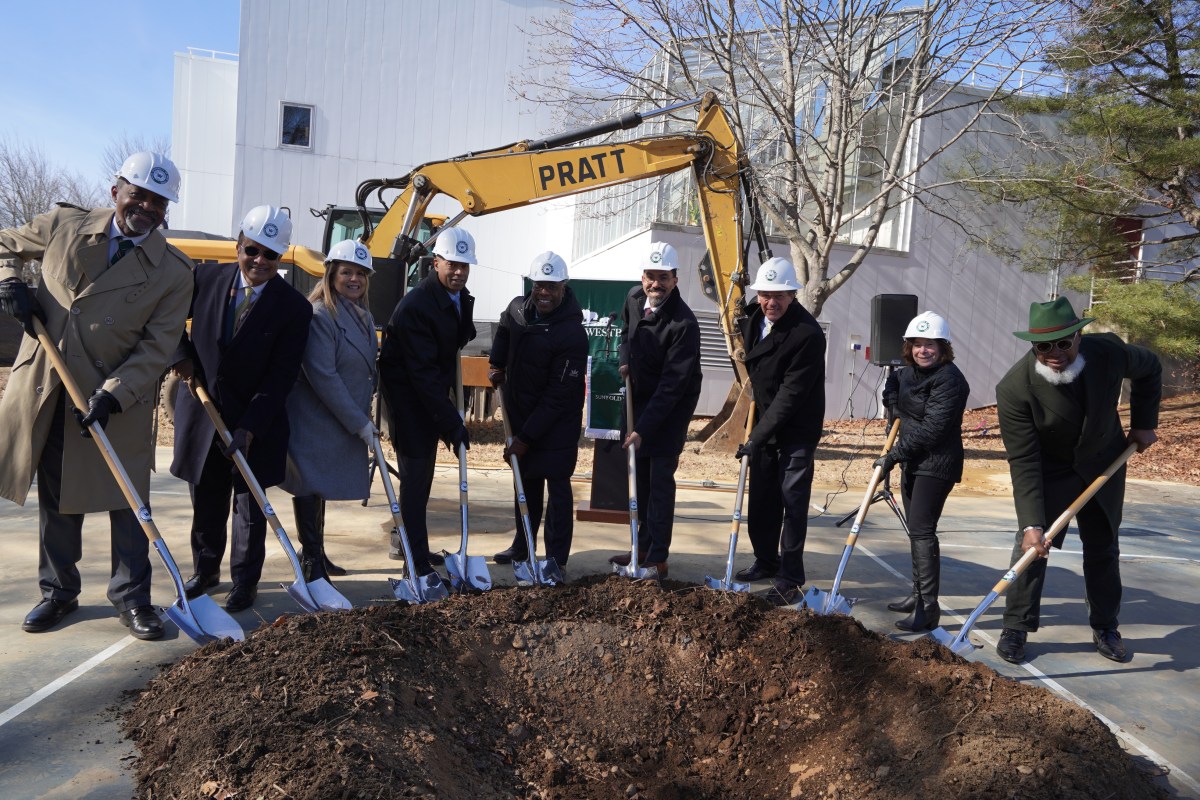
$200 million. That’s what SUNY Old Westbury is putting into a science building expansion, adding 35,000 square feet of classroom and lab space to a Nassau County campus that’s growing while much of American higher education is contracting.
Phase one is nearly finished. “We’re about to complete and open phase one and add about 24,000 square feet,” President Timothy Sams said. The work is part of a broader strategic plan the university rolled out last November, covering artificial intelligence integration, expanded financial aid, new social services, and facilities that would look ambitious at a school twice the size.
Sams doesn’t soften what’s happening elsewhere. Two closures come up fast when he talks about the climate. The College of St. Rose, up in Albany, ran out of money and shut its doors. Limestone University, founded in Gaffney, South Carolina, in 1845 as an all-female institution, couldn’t scrape together $6 million to cover enrollment-driven deficits. Gone. “We’re seeing more universities and colleges shuttering,” Sams said.
Old Westbury is building instead.
The 604-acre campus serves more than 4,600 students across more than 40 undergraduate degrees and 16 graduate programs, including business, education, liberal studies, and mental health counseling. It’s a public liberal arts institution inside the SUNY system, which means it carries a financial backstop that private schools like Limestone never had. That structural difference isn’t minor right now. It’s the whole ballgame.
The science expansion is the big-ticket item, but it doesn’t stop there. Old Westbury is adding a stock market laboratory, a Maker Space loaded with 3-D printers, a small clean room set up for chip manufacturing, and an array of microscopes and research tools. Sams described the result as “a space chock full of technological resources.” The building is also being converted to geothermal heating and cooling, with more than a dozen geothermal reservoirs drilled into the ground beneath the campus. The U.S. Department of Energy has tracked the cost-reduction case for institutional geothermal systems, and Old Westbury’s conversion puts that data to work in the real world, cutting the carbon footprint of a building that’ll be training STEM students for decades.
None of it is happening in a calm environment. Federal pressure on colleges, post-pandemic enrollment drops, and the raw cost burden on students have stacked up into something Sams describes without any rhetorical softening. “The winds are shifting more dramatically than ever before, and more quickly,” he said.
There’s also a cultural current running against four-year degrees. Policy voices have spent years arguing that trades and certifications beat college for return on investment, that the liberal arts can’t justify the debt they generate. Sams doesn’t accept that framing. “There has been an insidious suggestion that higher education has decreased value toward skills,” he said. Old Westbury’s answer is to make the skills visible, hence the Maker Space, the chip-manufacturing clean room, the geothermal infrastructure woven into the building itself.
For context on where Old Westbury sits in 2026, the Long Island Press profiled the school’s current direction this April, tracing how the university has positioned itself against the national trend. The picture that emerges isn’t of a school coasting on SUNY’s stability. It’s one that’s spending aggressively on the bet that public liberal arts institutions can compete if they don’t wait for conditions to improve.
Taxpayers carrying the cost of SUNY’s capital programs have every right to ask whether $200 million in bricks and geothermal wells is the right deployment of public dollars when 4,600 students are the direct beneficiaries. Enrollment growth would be the answer Sams needs to deliver. It’s also worth watching whether the graduate program count, currently sitting at 16, expands as the new square footage comes online.
The school that closed wasn’t Limestone’s fault alone. It’s worth saying that directly. A $6 million shortfall shouldn’t be a death sentence for an institution founded in 1845. But it was. Old Westbury, whatever its advantages, knows that.
“We’re seeing more universities and colleges shuttering,” Sams said again, when the conversation circled back to it. No elaboration needed.