









$9.5 million. That’s what a Queens woman admitted to stealing from two elderly people who hired her to pay their bills.
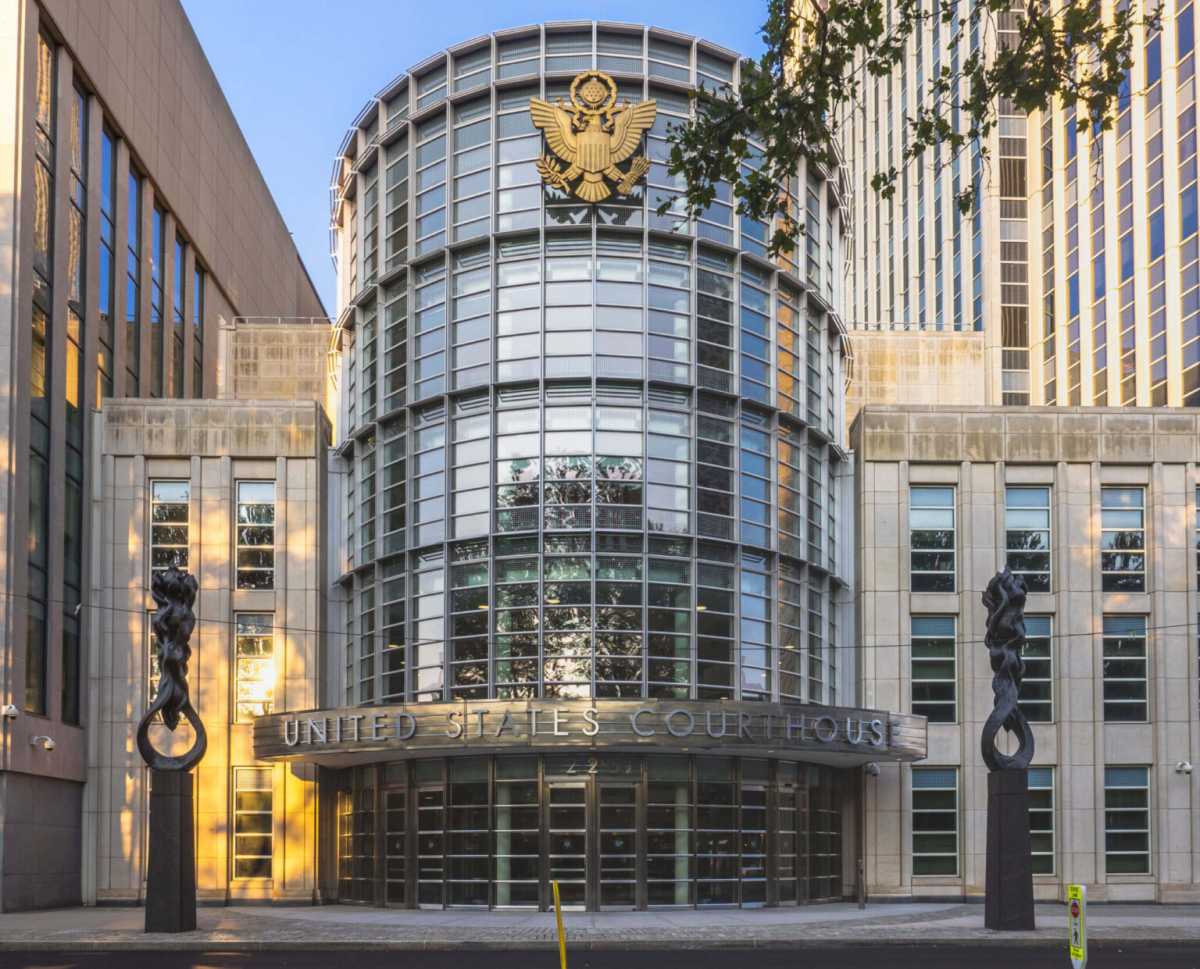
Catalina Corona, 62, entered a guilty plea on April 8 in Brooklyn federal court, admitting to wire fraud charges connected to a scheme that ran from 2017 through 2024. She lives on 51st Avenue near Flushing Meadows Corona Park in Corona. U.S. District Judge Nicholas Garaufis set sentencing for July 23. She’s looking at up to 30 years in federal prison.
The victims were Richard Schmeelk and his wife Priscilla. They lived in Lawrence, Nassau County and kept a second home in Palm Springs, Florida. Corona was their personal assistant. Her job was straightforward: pay the bills, book travel, handle household logistics. Instead, she ran a seven-year theft operation out of the couple’s own bank accounts.
Here’s how it worked. Corona deposited hundreds of checks made out to cash, forging both of the Schmeelks’ signatures. She did this at multiple banks, including one in Woodside, Queens. The money didn’t go toward the household. It went toward her credit card debt and her shopping habits. Investigators found she spent more than $1 million at Louis Vuitton, roughly $125,000 at Cartier, nearly $300,000 at Gucci, and over $300,000 on Apple products. Close to $5 million went straight to paying off her own credit card balances.
What broke the case open wasn’t sophisticated surveillance. A single check for $1,500 flagged by one of her banks in 2024 caught investigators’ attention. By that point, Richard Schmeelk had already died at age 92. Corona didn’t stop. She kept forging checks and draining Priscilla Schmeelk’s accounts even after the man she’d worked for was gone.
That’s the part that’s hard to sit with.
Richard Schmeelk wasn’t just an elderly retiree with money. He was a Far Rockaway native who graduated high school in 1943 and enlisted in the U.S. Navy, serving in the submarine service during World War II. After the war, he built a career in finance that took him to Salomon Brothers, eventually becoming a top investment banker. He survived years underwater in a submarine during wartime. His widow is now left to reckon with the fact that the woman managing their household was quietly looting it for nearly a decade.
According to Long Island Press, prosecutors in the Eastern District of New York pushed this case hard once the check hit their radar. Wire fraud charges aren’t minor, and wire fraud carries serious federal penalties that federal prosecutors in this district have shown they won’t hesitate to pursue.
“Today’s plea means the defendant has been held accountable for a calculated scheme that siphoned off nearly $10 million from the very employers who trusted her,” said U.S. Attorney Joseph Nocella. “Our office will continue to pursue those who exploit positions of trust for personal gain and ensure they face the consequences for their deception and fraud.”
FBI Assistant Director in Charge James Dennehy also weighed in.
“The FBI is committed to holding accountable individuals who abuse positions of trust out of selfish greed.”
Nassau County prosecutors weren’t the only ones calling for consequences. Eastern District officials made the prosecution’s tone clear through their public statements.
“Catalina Corona stole nearly $10 million from an elderly couple who entrusted her with their care to fund her lavish shopping habits,” Barnacle said.
The numbers here tell the full story on their own. Between 2017 and 2024, Corona had 8 years to operate, though the scheme ran for 7 of them before a $1,500 check finally tripped a wire at a bank. Nearly $10 million gone from two people in their 90s who thought they’d hired someone trustworthy. Richard Schmeelk lived to 92. His wife, Priscilla, trusted a personal assistant with their finances in a way that people of that generation often did.
Corona’s sentencing date is July 23, 2026. Judge Garaufis will handle it. The maximum exposure is 30 years, though federal sentencing guidelines will shape whatever she actually receives. Given the scale of the theft, the length of the scheme, and the fact that she didn’t stop after Richard Schmeelk’s death, it’s difficult to imagine prosecutors asking for leniency.
The $9.5 million is gone.