










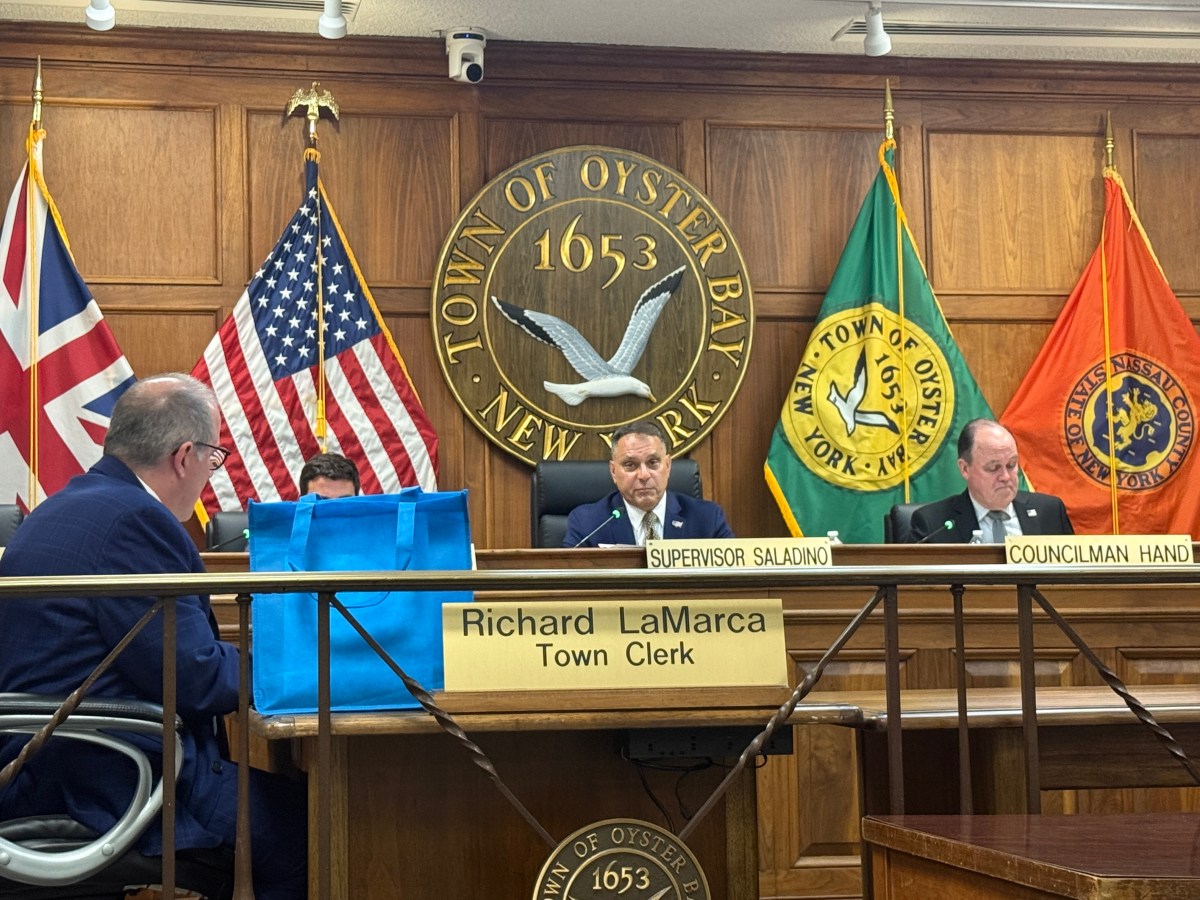
Taxpayers in Oyster Bay won’t pay a dime in settlement cash, but that doesn’t mean this fight came cheap. The town board quietly closed out two housing discrimination lawsuits at its April 14, 2026 meeting, handling both approvals through the resolution calendar with zero public comment from the board or Town Supervisor Joseph Saladino.
The legal trouble started back in 2014, when the Justice Department filed suit against the town, arguing that the Oyster Bay Next Generation and Oyster Bay Golden Age Housing programs violated the Fair Housing Act. The federal argument wasn’t complicated. Both programs gave preference to existing town residents. Oyster Bay’s population skewed heavily white. That residency preference, prosecutors said, effectively shut African Americans out of below-market-rate homes built for first-time buyers and senior citizens. The math wasn’t subtle.
The state Division of Human Rights followed in 2015, filing its own action and arguing that the same Fair Housing Act standards prohibited what it called “discriminatory practices” that blocked access to housing based on race, religion, and other protected criteria.
Neither lawsuit ever reached a jury. That’s worth noting.
Under both settlements, no money changes hands. What the town does owe is three years of compliance: all elected officials must designate town employees to attend annual Fair Housing Education and Training sessions, according to documents obtained by Long Island Press.
The town’s denial is baked right into the settlement text. “The Town maintains that it has never discriminated, and does not discriminate, in violation of the Fair Housing Act,” the settlement document states. It continues: “The Town agrees that it will not discriminate in violation of any provision of the Fair Housing Act.”
“That’s the classic non-admission boilerplate,” said a housing attorney familiar with municipal settlements who wasn’t authorized to speak on the record. “Lawyers write that language every day. It tells you nothing about what actually happened inside those programs.”
What the records do spell out is how the Next Generation program operated. Developers received zoning variances allowing more units per acre than existing rules permitted. In return, they agreed to sell only to income-qualified applicants at below-market prices. Standard inclusionary zoning, on paper. The problem, according to federal lawyers, was the residency preference layered on top of the income test, which narrowed the eligible buyer pool to an overwhelmingly white group before income restrictions even came into play.
Fifty-six units got built under Next Generation, all of them in Plainview and Massapequa. Those communities sit inside Nassau County and carry predominantly white demographic profiles. Whether African American applicants who met income thresholds ever applied and got screened out isn’t fully answered by the settlement documents.
Advocacy groups that track these patterns don’t find the outcome surprising. The Nassau County Human Rights Commission has long flagged residency preferences in local housing programs as a structural mechanism for racial exclusion, even when no discriminatory intent can be proven. The National Fair Housing Alliance has documented similar patterns in suburban municipalities nationwide.
The number 1,476 appears in town documents related to the Golden Age Housing program, representing the total units considered under that program’s framework during the period under dispute. The federal complaint covered conduct going back to at least 2014, meaning the town spent 12 years carrying this litigation from first filing to final resolution.
Fourteen is the number of years that have passed since the Justice Department first put Oyster Bay on notice. That’s a long time for a program to operate under a federal discrimination cloud. The town’s lawyers spent those years defending programs that eventually required a signed pledge not to repeat whatever allegedly happened.
What you won’t see in the settlement is any finding that discrimination occurred. The town got out without admitting anything, without paying damages, and without going to trial. What it couldn’t avoid was the compliance requirement and a very public record that the Justice Department and the Division of Human Rights both thought these housing programs warranted federal and state lawsuits.
The training sessions start now. We’ll see if anyone shows up.