










Taxpayers in Oyster Bay are now four extensions into a temporary ban that nobody seems to know how to make permanent.
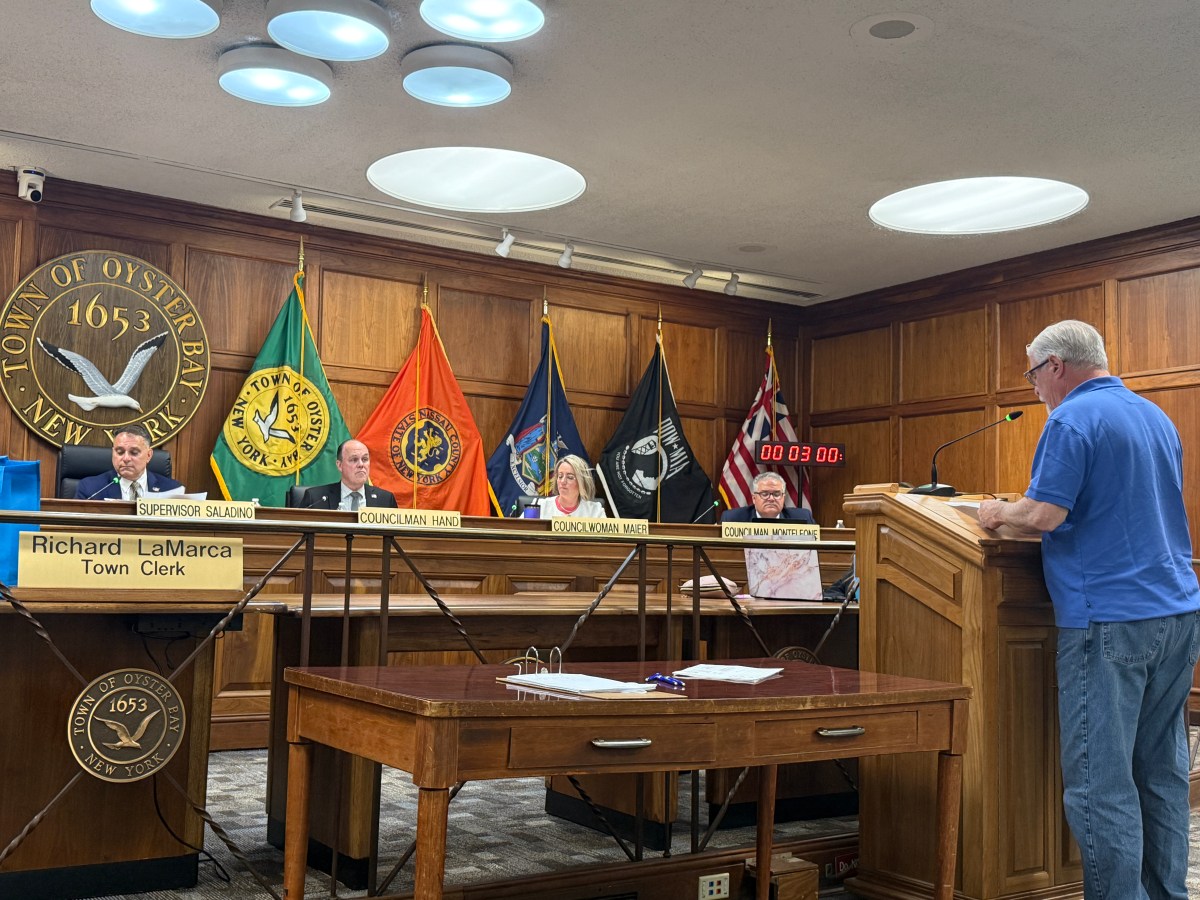
The Town of Oyster Bay voted unanimously Tuesday to stretch its moratorium on battery energy storage systems by 12 months, pushing the deadline from April 30, 2026 to April 30, 2027. That’s the fourth time the board has extended the ban since it first took effect in April 2024. Previous extensions each ran six months. This one’s the first full year-long stretch Oyster Bay has approved.
The backstory matters here. Jupiter Power Company once proposed a 275-megawatt lithium battery storage facility in Glenwood Landing, a project that would’ve sat within striking distance of both Glen Head and Glenwood Landing elementary schools. Jupiter Power has since walked away from that proposal, but residents don’t believe that’s the end of it. They’re worried the company, or somebody like them, circles back with a revised plan and forces the community through the whole fight again.
That fear drove a packed room at the March 24 public hearing.
Michael Montesano, special counsel to the town attorney’s office, told the board the new extension is structurally identical to the existing moratorium, just longer. He acknowledged that New York State has taken small steps toward updating its fire code, which has been one of the town’s central concerns since 2024. Small steps. That’s the phrase he used, and it didn’t exactly inspire confidence in anyone sitting in those chairs. Town officials have also raised concerns about clean water access, evacuation planning around large storage sites, and health risks to residential neighborhoods packed close to proposed facilities.
Glenwood Landing isn’t the only site on the radar. Montesano has flagged a proposed storage facility on one acre at the former Grumman site in Bethpage, a parcel with its own long environmental history from decades of aerospace manufacturing. Whether that proposal gets any traction depends partly on how hard Nassau County’s towns push back and whether their zoning can hold up under legal pressure.
Two Glen Head residents, Chris Panzeca and Doug Augenthaler, have been at nearly every one of these hearings. They spoke Tuesday before the board’s vote, and neither one is backing down.
Augenthaler’s focus is fire risk, and he didn’t mince words. “The state should be killing this, you should be killing this, everybody should be killing this,” he told the board, according to Long Island Press. He’s asking elected officials at every level to stop treating this as somebody else’s problem.
Panzeca pushed for something more durable than another extension. “I think we need to be expeditious and look at what’s going on in other communities and think about zoning,” she said. She’s right. A moratorium buys time. It doesn’t buy protection. If Oyster Bay doesn’t get permanent zoning language in place before April 30, 2027, the town could find itself back at the same table, voting on extension number five, while an energy developer’s lawyers are already drafting their next application.
The New York State Association of Towns publishes guidance on permanent land use controls specifically designed to survive legal challenges. Oyster Bay should be working through those tools now, not 16 months from now when the next deadline is breathing down their necks.
Battery storage demand isn’t going anywhere. The U.S. Energy Information Administration tracks the rapid expansion of grid-scale storage projects nationally, and Long Island’s grid pressures make it a target-rich environment for developers hunting for sites. That’s the reality Oyster Bay is managing, and a 12-month moratorium extension is a thin shield against it.
The question that hasn’t been fully answered yet: what’s this costing taxpayers in legal fees, special counsel hours, and staff time across four rounds of extensions dating back to 2024? Montesano’s time isn’t free. Neither is anyone else’s at the town attorney’s office. The board should put a dollar figure on the total cost of this moratorium cycle before it votes on anything else. Residents deserve to know what the holding pattern is actually running them.
April 30, 2027 is now the hard deadline. The town has 12 months to turn a temporary ban into something that lasts.