








Taxpayers in Nassau County have a stake in what happens to 350,000 Haitian nationals whose temporary protected status program protections are on the chopping block, and Garden City Democrat Laura Gillen isn’t waiting around to see how it plays out.
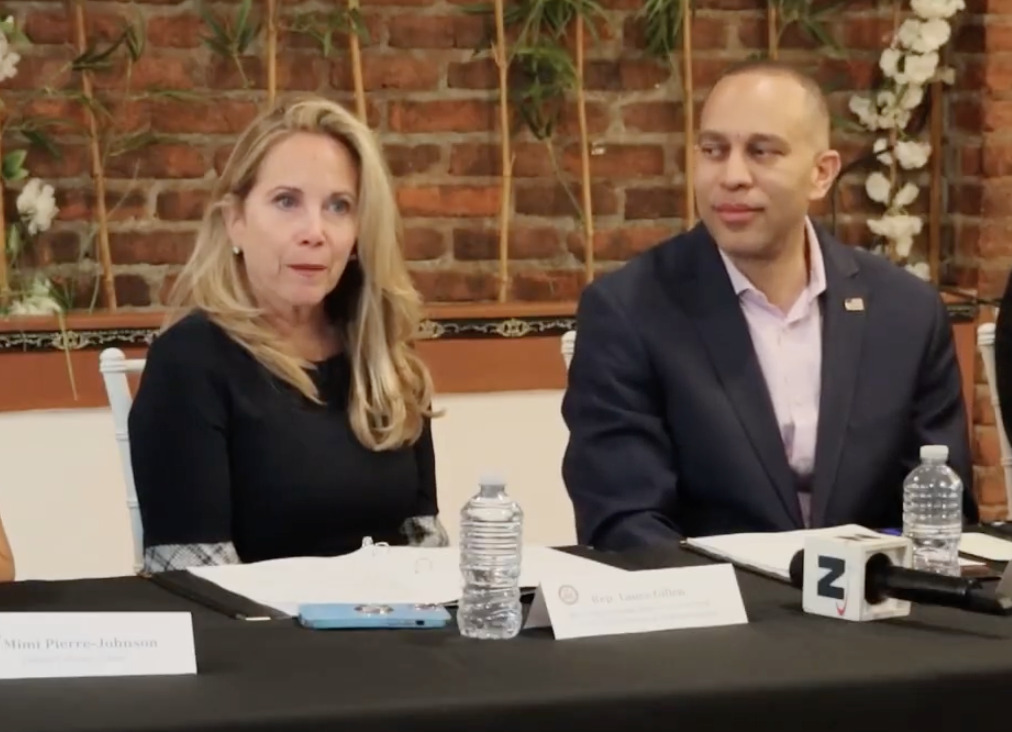
Gillen met with House Minority Leader Hakeem Jeffries and Haitian community leaders at an Elmont cafe last week. The agenda was straightforward: build momentum for a bill that would lock in TPS protections through 2029. Two days later, the legislation cleared a procedural vote Wednesday, then moved to a full House vote Thursday.
The bill didn’t start where it ended up. Introduced in early 2025, the original version proposed an 18-month extension. That got revised. The final language sets a hard deadline of 2029, giving Haitian immigrants a longer runway of legal certainty than the first draft offered.
Why does Elmont keep coming up in this conversation? Because the 11003 zip code carries the highest concentration of residents with Haitian ancestry anywhere in Nassau County, according to American Community Survey data. Sections of Valley Stream, Baldwin, Hempstead, and Freeport rank right behind it. Across Long Island, the Haitian community is not small, not peripheral, and not abstract.
U.S. Rep. Ayanna Pressley, the Massachusetts Democrat, joined Gillen at a press conference and put the number plainly. More than 350,000 Haitian nationals currently living in the U.S. face losing their TPS protections. That’s a community the size of a mid-sized American city facing potential deportation to a country that’s been in crisis for years.
Gillen’s statement at the Elmont meeting didn’t hedge.
“The current Administration has continuously threatened our Haitian neighbors’ lives by attempting to end their TPS status,” Gillen said. She called the prospect of ending protections “tantamount to a death sentence for Haitian families who would be sent back to Haiti.”
Pressley appeared at a separate press conference alongside Gillen, Democratic Whip Katherine Clark, also of Massachusetts, and Republican Rep. Mike Lawler of New York. Lawler’s presence is worth noting. Jeffries, speaking at the Elmont gathering, acknowledged that Democrats don’t hold the House majority and that passing bills right now requires Republican votes. Four Republicans crossed the aisle to support the Haitian TPS bill. Four isn’t a landslide, but it’s enough to make the vote competitive.
“House Democrats are fighting on multiple fronts on behalf of our Haitian brothers and sisters, and I’m confident that we’re going to get something done to restore and extend TPS protections,” Jeffries said, according to Long Island Press.
That bipartisan crack matters. The current administration’s posture on immigration hasn’t given Republicans much cover to break ranks, and yet 16 isn’t a typo in the original count, four is. Four Republicans voting yes on a Haitian TPS bill in 2026 doesn’t happen by accident. It happens because constituent pressure, or moral calculation, or some combination of both, made it unavoidable.
State Assembly Member Michaelle Solages, a Democrat from Elmont, didn’t need a translator for what this bill means. She represents the district most directly affected, and she made clear she’s not sitting out this fight.
“As a Haitian-American and a fellow legislator, I stand with my colleagues in Congress to urge the immediate passage of this legislation,” Solages said in a release from Gillen’s office, “and I pledge to continue to stand against bullies and tyrants on behalf of the marginalized.”
The 2021 earthquake and ongoing instability in Haiti form the backdrop here. TPS was designed precisely for situations like this, where returning to a home country isn’t safe. Opponents of extending the status argue it’s been renewed too many times and that it’s become a de facto permanent residency program. Supporters say that’s the point. If the conditions haven’t changed, why would the protection expire?
That’s a policy argument that won’t get resolved in one House vote. What did get resolved, at least temporarily, is that Gillen’s bill cleared a procedural hurdle and now heads somewhere with real consequences for Nassau County communities who’ve been watching this thing unfold with their whole lives on the line.