








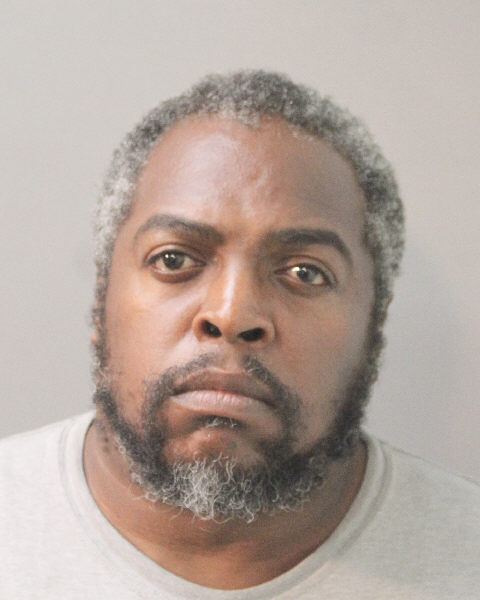
$241,000 in cash. That’s what Marc Lindor allegedly pulled from a bank account that had been overdrawn by $77.85 just weeks earlier, after a U.S. Treasury check worth nearly $1.7 million landed in it under circumstances Nassau County prosecutors say were entirely fraudulent.
Lindor, 29, of Amityville, was arraigned Thursday, April 16, in Nassau County court. He pleaded not guilty to charges of grand larceny and criminal possession of a forged instrument. Nassau County District Attorney Anne Donnelly announced the indictment, noting Lindor faces up to 25 years in prison if convicted. He’s due back in court May 18.
The money was never his to begin with. A Brooklyn-based home care agency had applied for a COVID-19 tax credit through the IRS’s Employee Retention Credit program, and the federal government issued that check directly to them. Somewhere between issuance and deposit, prosecutors say, the check was fraudulently altered to name Lindor’s company, Nicolaoca Enterprises, Inc., as the payee. Nobody at the original agency authorized that change.
Surveillance footage captured May 21, 2024, shows Lindor handing that check to a bank teller in Valley Stream, Nassau County. The account he deposited it into, a Nicolaoca Enterprises business account he’d opened in January 2024, was carrying a negative balance of $77.85 at the time of deposit. He’d had the account open for roughly four months.
What happened next wasn’t subtle. Between June 4 and July 3, 2024, Lindor allegedly moved more than $470,000 out of the account. He transferred $220,000 to outside bank accounts belonging to other individuals. He withdrew $241,000 in cash and checks across branches in Valley Stream and Queens Village. Bank records, according to Donnelly, show he spent more than $9,000 in just seven days, with transactions at BMW, Best Buy, the JW Marriott, and on airfare. That’s a burn rate that tends to attract attention.
It did. The bank ran a routine compliance review of the account, and Lindor couldn’t produce acceptable proof of address. Around July 10, 2024, the bank closed it out and issued a closeout check for the remaining balance, somewhere around $1.23 million.
Here’s where things got complicated for him. Around July 29, 2024, the U.S. Treasury Inspector General for Tax Administration notified the bank that the original Treasury check had been fraudulently altered. The bank immediately placed a stop payment on the closeout check. Lindor allegedly tried to cash that check at a check-cashing business in Brooklyn. They declined. They knew it wouldn’t clear.
He didn’t stop there. Between July 25 and August 6, 2024, Lindor allegedly opened a brand-new checking account at a different financial institution, again in the name of Nicolaoca Enterprises, Inc. This time he told the bank he owned a Brooklyn autobody shop. Then he allegedly tried to deposit the stopped closeout check into that account. That didn’t work either, according to reporting by Long Island Press.
Prosecutors built the case from surveillance recordings, bank records from multiple institutions, and account histories spanning 2020 and 2021 through 2024. The paper trail was thorough. The U.S. Treasury Inspector General for Tax Administration cooperated in the investigation, which is standard practice in cases involving fraudulently altered federal instruments.
“This defendant is accused of stealing from a program designed to help workers stay employed during the pandemic,” Donnelly said in a statement released by the Nassau County District Attorney’s office Thursday.
The Employee Retention Credit program was created in 2020 and expanded in 2021 to help businesses keep workers on payroll during COVID-19 disruptions. It became a significant target for fraud schemes nationwide, with the IRS flagging billions in suspicious claims. In this case, the check that allegedly ended up in Lindor’s hands was worth nearly $1.7 million, meant for 17 or 18 workers at a Brooklyn home care operation that had nothing to do with what followed. Lindor spent close to six figures in one week on luxury goods and travel, then allegedly tried twice to cash a check the Treasury had already flagged. He’s due back in Nassau County court May 21, 2026.